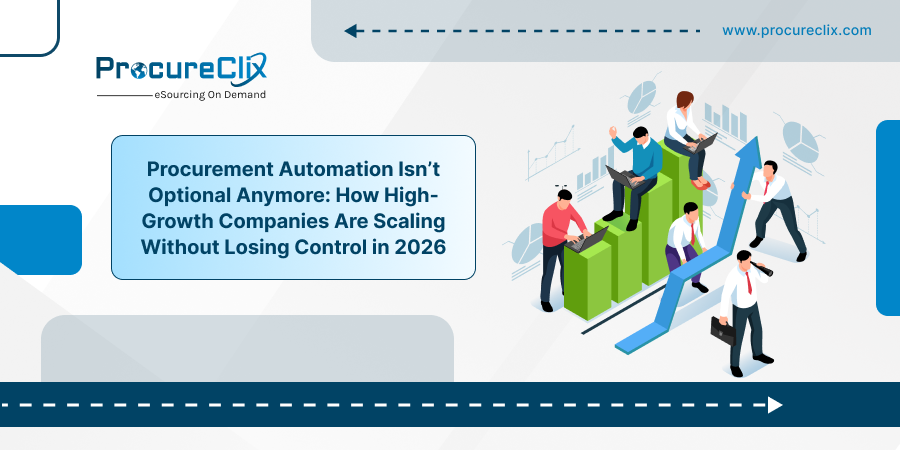
Growth is exciting, until it breaks your processes.
As we move into 2026, fast-growing companies are confronting a hard truth: procurement is often the first function to feel the strain of scale. What once worked with a handful of vendors, informal approvals, and shared spreadsheets quickly becomes a liability as spend increases, suppliers multiply, and internal requests surge.
And yet, many organizations still delay procurement automation until chaos is already baked into the business.
That hesitation is costly.
Heading into 2026, procurement automation is no longer about convenience. It’s about protecting margins, enforcing governance, and enabling scale without friction. Companies that automate early gain a structural advantage, while those that don’t are forced into reactive firefighting.
Let’s break down why procurement automation has become a non-negotiable as organizations prepare for 2026, and how the right platform turns operational complexity into a competitive edge.
The Hidden Cost of Scaling Without Procurement Automation
When companies scale quickly, spend grows faster than visibility.
As organizations head into 2026, new departments form, new vendors are added, and urgent purchases bypass procurement “just this once.” Before long, finance loses clarity, approvals slow down, and supplier risk creeps in unnoticed.
The most dangerous part is that these issues don’t show up immediately on a balance sheet.
They appear as:
- Budget overruns that can’t be traced
- Missed volume discounts
- Duplicate vendors providing the same service
- Inconsistent pricing across teams
- Delayed projects waiting on approvals
Without automation, procurement becomes reactive, chasing problems instead of preventing them.
Growth doesn’t break procurement. Manual procurement breaks under growth.
Why Manual Procurement Collapses Under Growth
Manual processes rely on people remembering steps, following rules, and communicating perfectly across teams. That works, until scale introduces pressure.
As companies prepare for another year of growth in 2026, here’s where things continue to fail:
Email-Based Approvals
Requests get buried, approvals stall, and accountability disappears.
Spreadsheet Tracking
Version control breaks, data becomes unreliable, and reporting turns into guesswork.
Disconnected Systems
Procurement, finance, and operations operate in silos with no shared source of truth.
No Guardrails
Employees make purchases outside policy simply to keep work moving.
Industry research consistently shows that organizations without automated procurement experience significantly higher levels of maverick spend and contract leakage, especially during periods of rapid growth.
What Modern Procurement Automation Actually Means
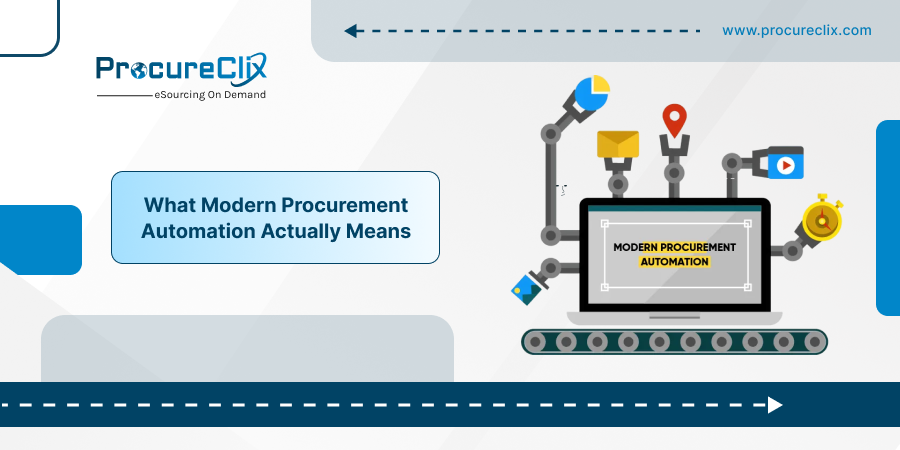
Procurement automation isn’t just digitizing paperwork. It is the orchestration of intelligent workflows, real-time data, and built-in controls across the entire purchasing lifecycle.
As we move into 2026, modern procurement automation platforms connect:
- Purchase requests
- Approval workflows
- Supplier onboarding
- RFx and competitive bidding
- Contract management
- Spend analytics
- ERP and accounting systems
The result is a single, intelligent system that enforces policy by design, not by manual policing.
Automation doesn’t slow teams down.
It removes friction while maintaining control.
Related: Automate your Proposals with ProcureClix’s RFP Software Solution
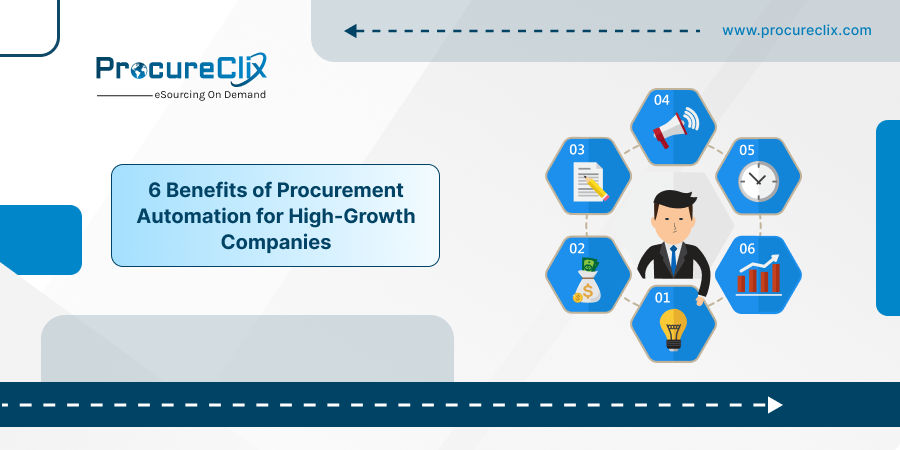
6 Benefits of Procurement Automation for High-Growth Companies
- Faster Purchasing Without Losing Governance
Automated workflows route requests to the right approvers instantly. No emails. No bottlenecks.
Outcome: Teams get what they need faster, without bypassing controls.
- Real-Time Spend Visibility
Automation provides live dashboards showing spend by category, vendor, department, and project.
Outcome: Finance and leadership always know where money is going, before it’s gone.
- Built-In Policy Enforcement
Approval rules, spend thresholds, and vendor requirements are embedded directly into the system.
Outcome: Compliance happens automatically, not retroactively.
- Smarter Supplier Decisions
Automated RFx and reverse auctions introduce competition and transparency into sourcing events.
Outcome: Better pricing, stronger contracts, and reduced supplier risk.
- Scalable Operations Without Headcount Bloat
Automation reduces the manual workload per transaction, allowing procurement teams to support growth without constant hiring.
Outcome: Lower operational costs and higher productivity.
- Audit-Ready Documentation
Every action is logged, including requests, approvals, contracts, changes, and communications.
Outcome: Audits become straightforward instead of stressful.
2026 Procurement Trends Shaping the Future
As organizations enter 2026, procurement is no longer a back-office function. It is a strategic driver of financial performance, risk management, and operational resilience.
Procurement Becomes a CFO-Level Growth Lever
CFOs are increasingly relying on procurement data to forecast cash flow, manage supplier risk, and protect margins. Procurement platforms that deliver real-time spend intelligence are now essential for financial planning.
Automation Expands Beyond P2P
Basic purchase-to-pay automation is no longer enough. In 2026, leading companies are automating the full procurement lifecycle, from sourcing and supplier onboarding to contracts and performance management.
AI-Driven Spend Intelligence Replaces Static Reporting
Static reports are giving way to intelligent dashboards that surface anomalies, savings opportunities, and risk indicators automatically, in real time.
Supplier Risk and Resilience Take Center Stage
Supply chain disruption and regulatory pressure have elevated supplier risk management. Procurement teams are prioritizing platforms that centralize supplier data and proactively flag issues.
Configurable Workflows Win Over Rigid Systems
One-size-fits-all procurement software is being replaced by configurable platforms that adapt to business processes without heavy IT involvement.
Procurement Technology Must Prove ROI
In 2026, procurement leaders are judged on measurable outcomes. Platforms must clearly demonstrate savings, efficiency gains, and risk reduction.
How to Choose the Right Procurement Automation Platform for 2026
As you evaluate procurement solutions for 2026 and beyond, look for a platform that is:
- Configurable, adapts to evolving workflows
- Integrated, connects seamlessly with ERP, accounting, and finance systems
- User-Friendly, encourages adoption across the organization
- Data-Driven, delivers actionable insights, not just reports
- Scalable, supports growth without performance issues
The wrong tool creates friction.
The right one disappears into the background, quietly enforcing discipline while enabling speed.
Why ProcureClix Was Built for Scale
ProcureClix was designed specifically for organizations navigating complexity, including growth, supplier expansion, multi-department purchasing, and increasing financial scrutiny.
As companies plan for 2026, ProcureClix delivers:
- End-to-end procurement automation
- Intelligent approval workflows
- RFx and reverse auction capabilities
- Real-time spend analytics
- Seamless ERP integrations
- Custom workflows without heavy IT involvement
Whether you’re scaling from $10M to $100M or managing enterprise-level procurement across multiple entities, ProcureClix scales with you, without forcing process rigidity.
Procurement Automation Is the Growth Multiplier
As 2026 approaches, the most successful companies don’t grow despite procurement controls. They grow because of them.
Procurement automation doesn’t restrict innovation.
It creates the structure that allows innovation to scale safely.
If your organization is growing, procurement automation isn’t something to “get to later.”
It’s the foundation that ensures growth stays profitable, compliant, and sustainable.
ProcureClix helps high-growth companies automate procurement without slowing down.
Schedule a free demo today and see how procurement automation becomes a competitive advantage, not a bottleneck.
ProcureClix Blog Jan 1 – Including outline of 2026 Blog Content Calendar