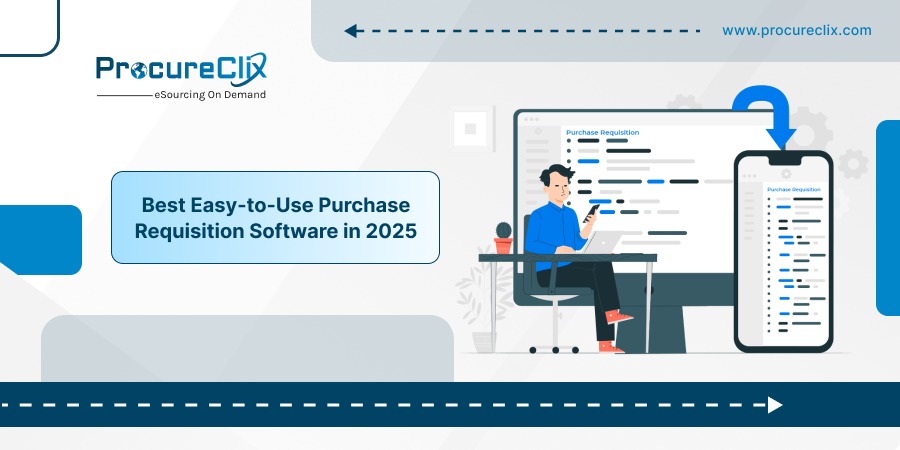
Regardless of industry, every business today needs to react quickly to maintain efficiency to stay ahead of changing cost structures. But manual purchase requisitions create bottlenecks that slow down operations and inflate costs. This makes it almost impossible to maximize agility. The right purchase requisition software transforms outdated, slow processes into automated workflows that save time and, more importantly, reduce costs. The key to success with procurement software is finding the right solution for your specific needs. Below, we’ll cover what to look for so you can find the best purchase requisition software for your business.
Start With The User Experience
The most powerful software won’t be much help if the purchase requisition workflow is convoluted and difficult to use. When evaluating your software options, include team members in the decision-making process who will be using the software, not just procurement managers. Check to see if tasks specific to your industry or use case require menu-diving or other time-consuming actions that interfere with the purchase requisition workflow.
Many established vendors like ProcureClix will always offer demo versions so your entire team can have a hands-on experience. When purchasing software in procurement, carefully evaluating the demo is a critical step. Just make sure to let your team know in advance so they can schedule extra time to work with the demo and give valuable feedback before you make a purchase decision.
Mobile considerations are also an important factor when choosing purchase requisition software. Ensure that you can approve requisitions and easily delegate approvals while out of the office. This allows your team to take full advantage of fast-moving changes without hitting bottlenecks.
Must-Have Features For Procurement Software Automation
The software’s purchase requisition workflow needs to have a few key features that will provide you the most value. Decide beforehand which features are mandatory and which ones you can live without. This will also help you decide on tier levels if the software you choose is subscription-based with different usage models.
Smart Approval Routing: This allows you to route approvals based on rules you create in advance. Your routing rules can be dependent on purchase amount, category, department, budget availability, and more. This lets your team save time and overhead by automatically dealing with split approvals or other complex workflows in your specific organization.
Requests for Proposals (RFPs): Manual RFPs are time-consuming and clunky. Automating these through smart automations increases compliance, engagement with suppliers, and overall efficiency. All proposal data should be aggregated in a centralized area so you can compare proposals at a glance, reducing your overall cycle time.
Budget Controls: Automated budget controls are essential to catch overspending before it happens. Look for features in your purchase requisition software that provide instant visibility into committed, spent, and available budgets at the department, project, or cost center level.
Reverse Auctions: Competition drives down prices, and reverse auctions such as those available with ProcureClix can reduce costs by 18% or more compared to standard bidding during the procurement process. Besides cost savings, reverse auctions remove tedious negotiations and drastically improve cycle time. Seamlessly connecting Requisition piece with reverse auction makes an entire procurement flow execute flawlessly.
Customizable Purchase Requisition Workflows
Every business will have its own unique workflows. You want to avoid software that forces you into a rigid system that is constantly pushing back and robbing efficiency. Before testing out software options, map out your approval scenarios and investigate how easy they are to replicate in the software. Not only that, but you want to see if the software offers unique improvements through its built-in tools to support your workflow.
Another area of customization to compare is the granularity of controls. Access controls or role-based permissions can be important for larger organizations. If you need this level of customization, check that it’s easily accessible before making a final decision.
Built-in Integrations For Your Existing Software Tools
Integration with your existing technology infrastructure is going to make or break how easy it is to implement the new software. It’s also critical for adding automations to your workflow.
Make a list of applications in your current technology stack that need to integrate with your purchase requisition software. This includes accounting software, collaborative tools, other procurement apps, and your ERP.
integration that connects the out of the box softwarr with any third party app can get you stress free from the task of manully transferring data from one app to the another.
process and avoid delays or downtime. Without a built-in integration, you’ll need to manually transfer data or build an integration around a vendor’s API, which is costly.
Evaluating Purchase Requisition Approval Workflow
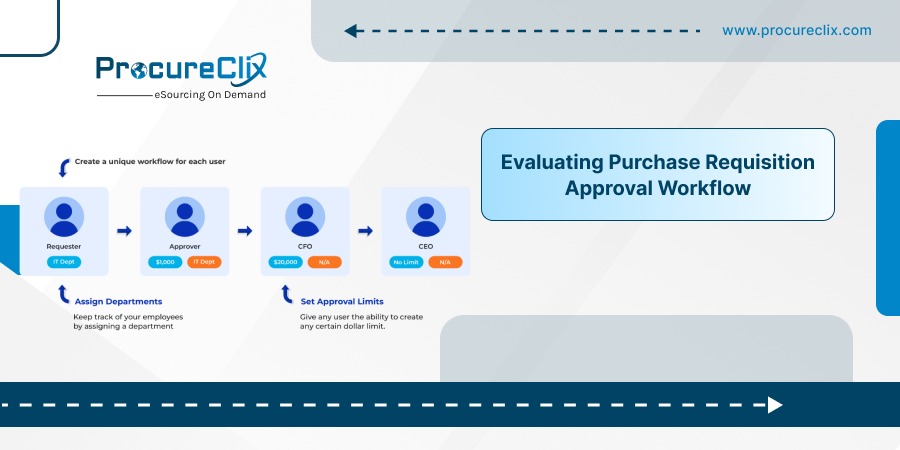
Even the best procurement workflow can hit roadblocks if there are approval issues. This can happen when someone is out of the office, or the specific purchase requires split approvals, and the contract sits for days before anyone notices.
Look for the following features to ensure your procurement workflow stays on track regardless of the approval process or who is available.
- Delegation Options: This functionality lets approvers assign backup reviewers during vacations or high-volume periods.
- Bulk approval: This allows managers to review and approve multiple requisitions simultaneously.
- Automated notifications: keep stakeholders informed without manual follow-up.
Decide On-Premise vs Cloud Hosted Requisition Software
Depending on your industry and contract requirements, you may have specific requirements for either on-premise software installation or cloud-hosted solutions. Cloud-hosted solutions will generally be easier to deploy and manage. For most businesses, this is the best option.
However, if unique security concerns or contracts require you to use on-premise solutions, make sure your selection offers that option.
Enhanced Metrics and Reporting
Optimizing any business requires data to make the right decisions. Your purchase requisitions hold valuable insights as to spending and margins within your business. To unlock these insights, you want a purchase requisition software tool with enhanced metrics that allow you to export and view data as needed.
One key area to look for beyond simple data exports is the ability to create dashboards and access true business intelligence (BI) used for visualizations and deep insights.
More Help Choosing the Best Purchase Requisition Software
Choosing the right purchase requisition software is a big decision, and you want to get it right the first time. If you have questions about procurement software and the different workflows available, contact our experts to help guide you through the decision process.
You can also access a completely free demo of our industry-leading ProcureClix software that has already helped thousands of businesses save 18% to 40% on their procurement spend.