Despite technological advances, improving procurement efficiency is still an area where some organizations struggle. Issues such as fragmented systems, manual handoffs, and reactive sourcing cycles all chip away at efficiency and interfere with core business operations.
To help combat this lingering problem and bring efficiency back to your organization, we’re listing the top 7 ways to improve procurement efficiency that are both fast and within the reach of virtually every business, regardless of size.
1. Eliminate Tail Spend Through Smarter Catalog Management
Tail spend is often where procurement discipline can start to collapse the fastest. While representing 80% of transactions, but only 20% of total spend, it’s an area where maverick spending flourishes undetected.
Most organizations look to address this through stricter policy enforcement, often through announcements or memos. But this is a band-aid fix, and to improve procurement efficiency, you need structural changes to prevent things like preferred supplier agreements from being bypassed.
In practical terms, this means deploying punchout catalog integrations (via OCI or cXML protocols) that connect directly to supplier systems, presenting users with pre-negotiated SKUs at contracted prices inside your own procurement interface.
For smart organizations, this is combined with dynamic catalog management tools that auto-route purchase requisitions to preferred suppliers based on category, department, or spend threshold rules.
Structural changes such as this reduce maverick spend while eliminating the need for procurement to police every transaction manually or constantly putting out policy memos reminding departments of how to operate.
2. Restructure Sourcing Cycles with e-Sourcing and Collaborative RFx
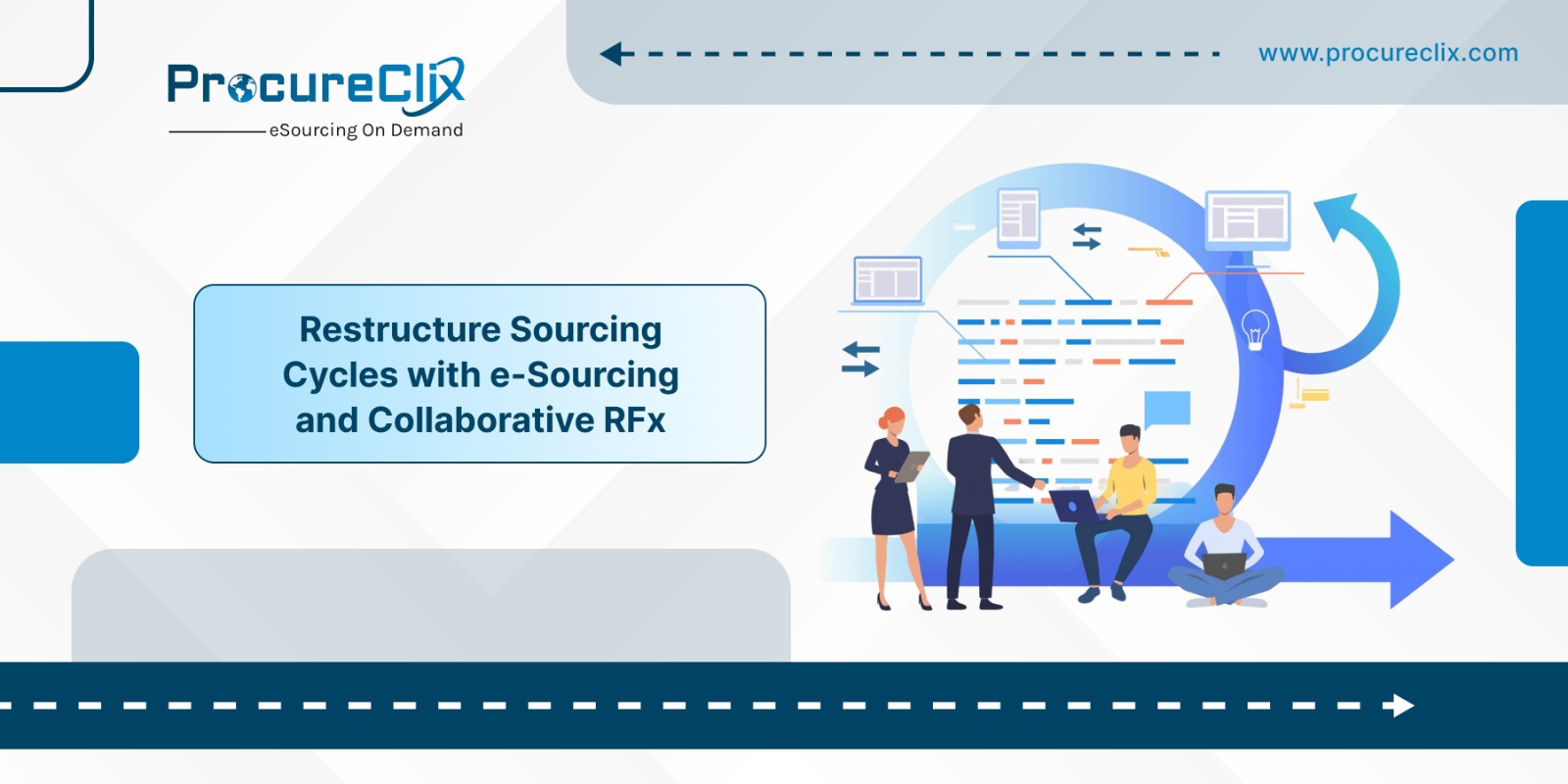
One of the most persistent procurement inefficiencies we see with organizations is linear, email-based RFI/RFQ/RFP processes. These processes quickly devolve into version control nightmares, introduce evaluator inconsistency, and dramatically extend your sourcing cycle times.
When organizations migrate to a structured e-procurement platform, it’s often seen as just a digitization move. But in reality, it fundamentally changes supplier engagement.
With a structured e-procurement platform, Concurrent RFx workflows allow multiple evaluators to score supplier responses simultaneously. This is achieved by using weighted scoring matrices, eliminating the sequential bottleneck of a serial review.
Another area to improve efficiency is through the use of supplier response portals and multi-round negotiation functionality.
Supplier response portals within e-procurement platforms help standardize submission formats, making side-by-side bid comparison quantitative rather than qualitative.
Multi-round negotiation functionality enables iterative price improvement without the back-and-forth of unstructured and inefficient email chains.
For commodity categories with sufficient supplier competition, reverse auctions can be deployed strategically to drive real-time price discovery and further improve overall procurement efficiency.
The result of these improvements can create savings of over 18% on addressable spend. More importantly, the cycle time is improved, so this goes beyond cost savings and improves a critical KPI for procurement departments.
3. Implement AI-Driven Spend Analytics and Classification
Spend analytics is the key to unlocking other optimizations and efficiencies. Data integrity is critical here, and classifications become the main driver behind efficiently consolidating suppliers, renegotiating contracts, or forecasting demand.
This is where AI and machine learning can save you months over manual processes.
This starts by implementing machine learning-based spend classification mapped to a standardized taxonomy. Typically, this will be UNSPSC at the segment and family level, or a custom taxonomy aligned to your category management structure.
ML classifiers process transactional data from ERP, AP, and P-card systems, normalize vendor names, and assign category codes with high accuracy at scale.
AI-powered spend analytics within e-procurement software provides further efficiency gains, including:
- Consolidation opportunities across business units
- Find off-contract spending
- Flag contract leakage
Leading e-procurement platforms such as ProcureClix will easily integrate with tools like Power BI or Tableau to provide real-time spend dashboards segmented by vendor, category, location, and department. Some platforms may also have their own visualization tools and dashboards if you don’t currently use third-party analytics solutions.
4. Deploy Intelligent Contract Lifecycle Management (CLM)
Contract leakage can be an efficiency killer for many organizations without intelligent CLM. Contracts can renew automatically at uncompetitive rates. Missed renewal windows can also drastically reduce negotiating power as organizations are forced to renew due to a lack of time to find alternatives.
CLM transforms a static document repository into an active obligation management system.
Automation triggers within the system alert you 90/60 days before a contract expires, allowing you time to develop new terms to propose or search for an alternative. This maximizes your negotiation leverage.
5. Automate Your Procure-to-Pay (P2P) Pipeline
In most enterprise workflows, the P2P pipeline has more manual handoffs and exception handling than any other workflow across the entire enterprise. This makes it low-hanging fruit for procurement efficiency gains, but it’s still often overlooked.
Intelligent P2P automation addresses this through rules-based approval routing that applies spend authority controls dynamically based on the requester, category, and amount.
This is done without requiring a procurement team member to intervene.
Automating the PR-to-PO conversion also eliminates the manual translation step entirely when a requisition meets predefined criteria.
Another efficiency gain results from three-way matching automation. The system automatically reconciles the purchase order, goods receipt, and supplier invoice based on exceptions.
From there, only true exceptions are flagged for human review. This process alone can reduce processing time up to 40% in some cases.
This automation can also be used as the foundation for dynamic discounting. While not an efficiency gain, it creates a P2P-adjacent value lever that directly benefits working capital.
6. Build Your Tech Stack Around Interoperability
The most common technical mistake procurement organizations make is addressing each workflow solution separately without considering interoperability. For example, if a sourcing solution can’t push data to the CLM, you essentially have siloed data, and you’ve just traded one inefficiency for another.
When selecting your procurement technology, consider the API compatibility between platforms and systems. Every platform in your stack needs to expose and consume compatibly structured data through documented APIs.
7. Use KPIs That Drive Procurement Behavior, Not Just Cost Savings
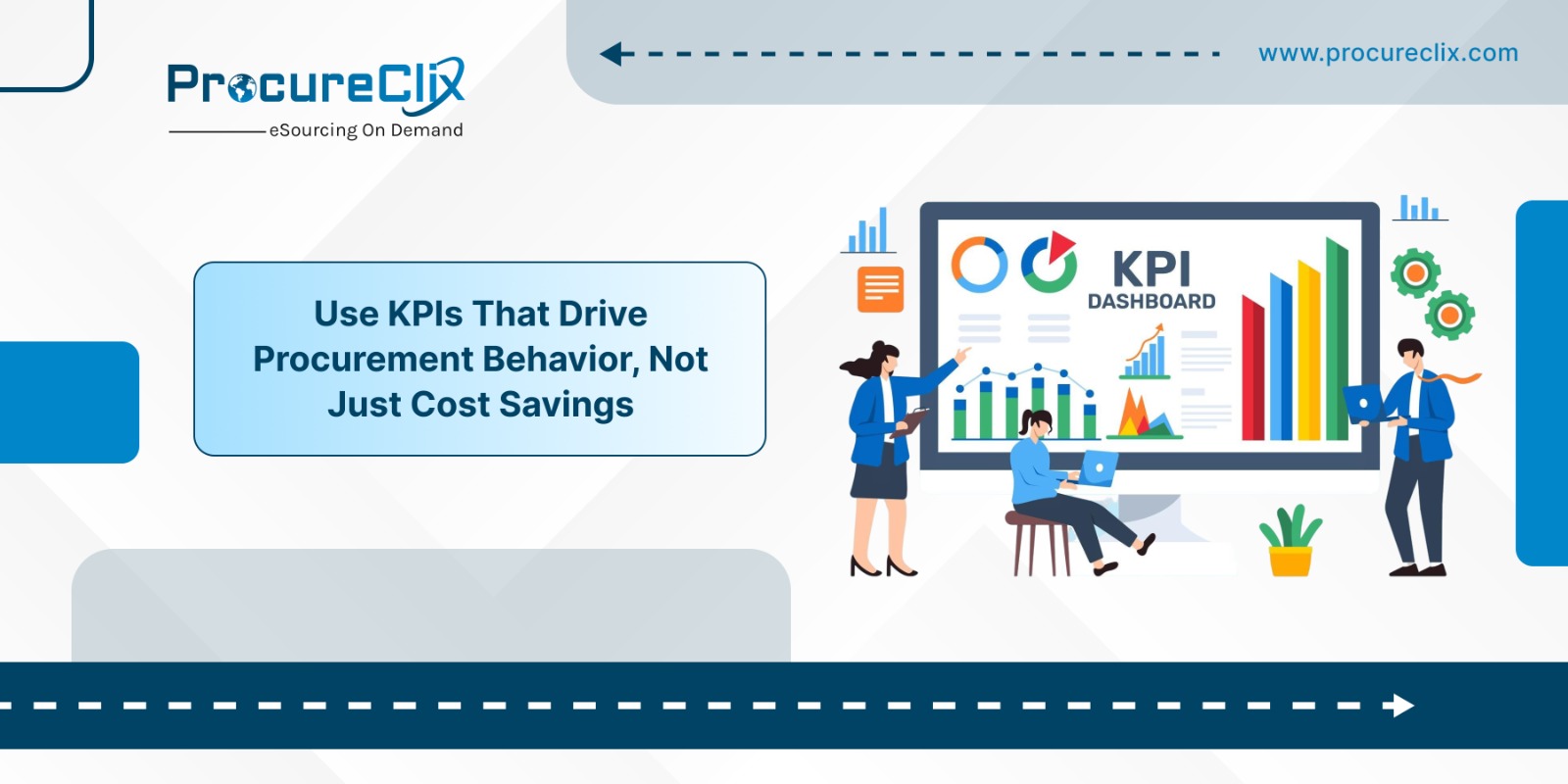
Procurement efficiency can sometimes be as much of a measurement problem as it is a process problem. Teams that overindex on cost savings can often miss the bigger picture of cycle times, supplier relationship quality, and process compliance because they simply aren’t measuring those data points.
For core efficiency, measurements should include these fundamental areas.
- Sourcing cycle time (from requisition to contract award, by category)
- Purchase order compliance rate (POs raised against contracts vs. off-contract)
- Contract utilization rate (spend under active contracts as % of addressable spend)
- Supplier on-time delivery and quality performance (linked to SLA obligations in CLM)
- Invoice exception rate (% of invoices requiring manual intervention in three-way match)
- Maverick spend as a % of total category spend
These metrics should be automated and pulled directly from your P2P, CLM, and spend analytics platforms into a live dashboard, and not compiled manually with spreadsheets. When procurement KPIs are visible in real time, they drive behavior change at the operational level, not just during the quarterly review.
Gain Immediate Procurement Efficiency With ProcureClix
Improving procurement efficiency provides organizations with the ability to make business decisions that were previously impossible. As procurement evolves from a cost-control center to one that creates new business and operational opportunities, ProcureClix helps you leverage these benefits immediately through tight operability and the latest procurement machine learning functionality.
Contact our procurement experts for a free, customized demo of our ProcureClix software and learn how your organization can start improving efficiency today.