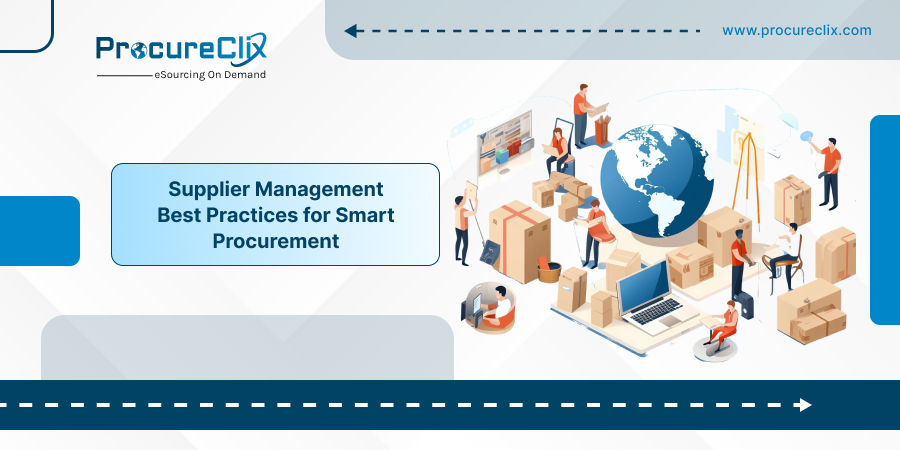
Organizations that consistently extract value from their supplier base use key best practices that lower the total cost of ownership, experience fewer disruptions, and build a stronger compliance posture.
By following these procurement best practices, organizations can move away from reactionary supplier management and start treating supplier data as a first-class asset to drive efficiency and cost savings.
Automated Onboarding and Clean Data Capture
In legacy systems, onboarding creates a bottleneck due to manual document verification. This often leads to “dirty data” that haunts the P2P cycle downstream. Fields left blank or inconsistently populated during manual processing become a reconciliation problem in your ERP, your CLM, and your risk monitoring tools.
A technical best practice to address this is to use a defined data schema for all onboarding. Combined with OCR for ingestion of onboarding documents, this ensures data is complete and fully usable for additional best practices downstream.
Further automation can be achieved through API-driven validation. Instead of manually checking data lists or credit scores, an API-driven workflow should trigger asynchronous calls to external databases. Suppliers can’t proceed until a compliant status code is received. This integrates compliance during the process so it can’t be sidestepped, instead of just being a memo about procurement policy.
Dynamic Risk Scoring & Matrix-Based Intelligence
The standard quarterly supplier review is a severely lagging indicator that won’t work in today’s supply chain environment. A procurement best practice is to use continuous and dynamic risk management for all suppliers.
Organizations can achieve this by using weighted risk matrices. Using this method, suppliers can be scored across a multi-vector plane.
While this can be done manually, platforms like ProcureClix can generate a Predictive Risk Score automatically. For example, if a Tier 1 supplier’s delivery velocity drops by 15% over a rolling 30-day window, the system can be set to trigger an automated early warning signal to alert procurement leads of the risk.
Automate OTIF and Defect Rate Tracking at the PO Level
On-Time In-Full (OTIF) and defect rates are the two most operationally meaningful supplier performance metrics in most categories. The problem is that these metrics need to be measured systematically.
Manual tracking of these metrics introduces far too much lag and errors to provide maximum agility.
A best practice is to connect your P2P system’s goods receipt data to your SRM so that OTIF is calculated automatically against each PO’s committed delivery date and confirmed quantity. Typically, you’ll aggregate these at the supplier level on a rolling 12-month basis.
If your ERP or other systems can’t provide this data cleanly to your P2P system, then that’s a data problem that needs to be solved first.
Link Supplier Records to Your CLM for Obligation Tracking
The supplier record in your SRM and the contract record in your CLM should be bidirectionally linked, not siloed. When these data sets are siloed, teams lose visibility into which contractual obligations are active, which price escalation clauses are approaching trigger dates, and which auto-renewal windows are closing.
Using the latest e-procurement software like ProcureClix automatically integrates this data into one centralized platform without the need for proprietary data connections to be developed.
Set Corrective Action Plan (CAP) Triggers Based on Scorecard Thresholds
Within many organizations, corrective action plans are still at the discretion of procurement managers. As a supplier management best practice, teams should implement automated triggers that are set based on dynamic monitoring and predetermined thresholds.
A CAP within your workflow should include a root cause analysis requirement from the supplier, specific remediation milestones with dates, an escalation path if milestones are missed, and a contractual reference to the clause that authorizes the CAP process.
Map Single-Source Concentration Risk Across Critical Categories
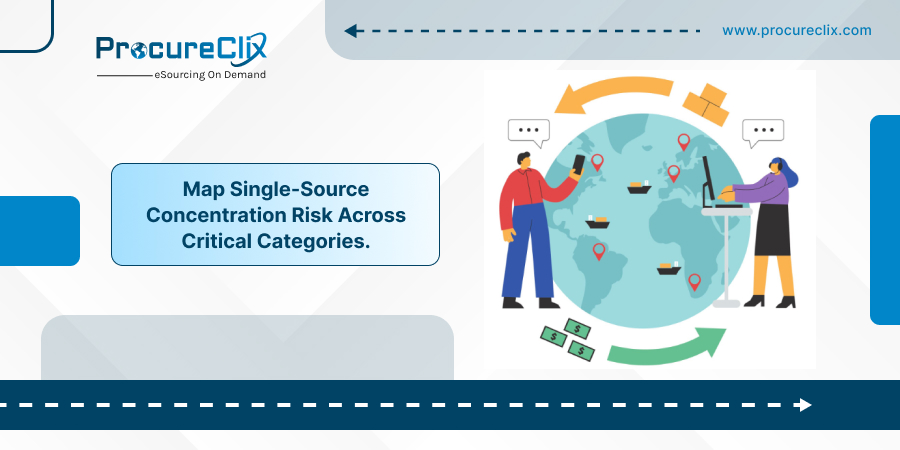
Single-source dependency is still one of the most common and underreported risks in enterprise supply chains. A key supplier management best practice to address this risk is to run a spend analytics query segmented by category, commodity, and supplier to identify any critical input where a high majority of volume flows through a single supplier.
After determining any supplier above your materially critical threshold, document the switching cost, lead time to qualify an alternative, and market availability of substitutes.
Whenever you find a concentration risk that is unnecessarily high, look for dual-sourcing or qualification of a backup supplier as a formal strategy.
Use Spend Analytics to Identify Supplier Consolidation Opportunities
Another supplier management best practice is avoiding uncontrolled supplier proliferation. Having multiple suppliers has its advantages, but active suppliers with overlapping services can bloat your administrative overhead.
The solution is supplier consolidation. By running a tail spend analysis segmented by category and sub-category, you can identify where spend is fragmented across multiple suppliers that could be consolidated into one or two preferred sources.
This type of consolidation helps to create pricing leverage, simplifies compliance, and reduces the total number of supplier records requiring active governance.
Your threshold for consolidation will be unique to your business, but a common starting point for SMBs is suppliers below $25K in annual spend that represent categories already covered by strategic contracts.
Establish Escalation Paths in Your SRM Before You Need Them
Many procurement teams are still operating from a reactionary standpoint. When a supplier relationship starts to degrade, that’s when they look to create an escalation path. The problem is that this wastes time and takes you out of the driver’s seat.
A procurement best practice is to build a tiered escalation framework into your SRM. For example, Level 1 (category manager to supplier account manager), Level 2 (procurement director to supplier VP), Level 3 (CPO to supplier C-suite).
You can then document which conditions trigger each level and set your maximum response time expectations at each tier.
For strategic suppliers, this escalation framework should be referenced in the supplier agreement itself, giving both parties clarity on the process before a dispute arises. Escalation paths that are defined in advance resolve faster and with less commercial damage than those improvised under pressure.
Implementing Supplier Management Best Practices is Easy With The Right E-Procurement Platform
The common thread between all of these supplier management best practices is data quality, interoperability, and consistency. ProcureClix helps procurement teams operationalize these practices through purpose-built supplier management workflows that are designed around maximum efficiency.
Contact our procurement experts today for a free customized demo of our ProcureClix platform and start applying these best practices to your team’s workflow today.