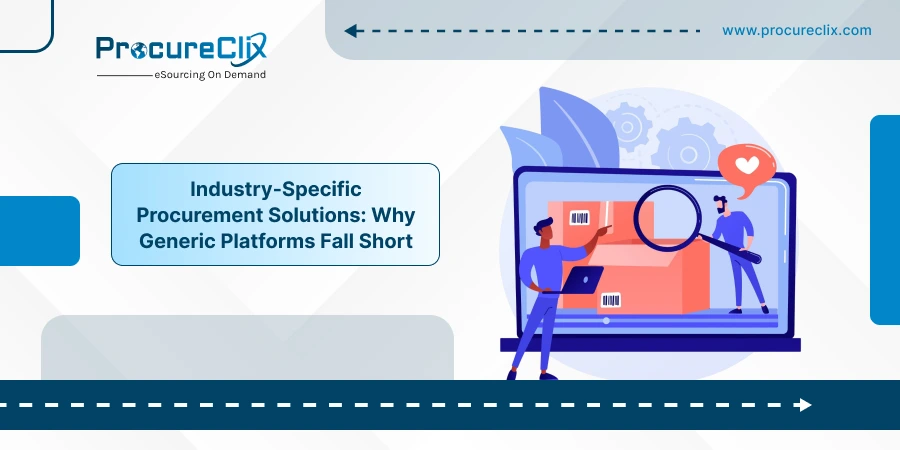
Many traditional procurement platforms are architected around a generalized source to pay (S2P) framework. Solution providers do this to try to be a reasonable fit for as large an audience as possible.
The problem is, different industries have unique procurement requirements, friction points, and regulations to deal with. These complex frameworks can quickly outstrip a generalized platform and leave many efficiencies untapped.
Areas such as compliance gaps where approval hierarchies don’t reflect regulatory obligations, spend categorization that doesn’t align with industry-standard taxonomies, and sourcing workflows that ignore sector-specific supplier qualification criteria are all things generalized platforms miss.
To help you find the right procurement solution for your industry, we’ll cover a few of the most common industries, explain what makes their procurement workflows unique, and how specific cloud-based solutions like ProcureClix can provide the features and flexibility to meet specific industry demands.
Manufacturing: Production Aligned Procurement
Manufacturing procurement operates across two fundamentally different spend categories that require distinct workflows. Those two are: 1). direct materials (inputs to finished goods) and 2). MRO (maintenance, repair, and operations).
Trying to use the same solution for both of these categories produces noise in spend reporting and obscures savings opportunities in both categories.
On the direct materials side, the highest-leverage tool for commodity inputs like raw materials, packaging, and industrial components with defined specifications is the reverse auction.
Platforms like ProcureClix enable rapid reverse auction configuration, allowing sourcing teams to replace manual RFQ management with structured, time-boxed competitive events.
On the MRO and indirect side, spend analysis mapped to the UNSPSC taxonomy becomes a key factor in identifying consolidation opportunities across cost centers. Furthermore, being able to use BI for tying purchase requisitions to production cycle triggers instead of ad hoc demand allows for smarter decision-making.
To take advantage of this, look for procurement platforms that provide seamless integration with services such as Tableau or the specific application you’re using for BI.
Healthcare Procurement: Compliance First
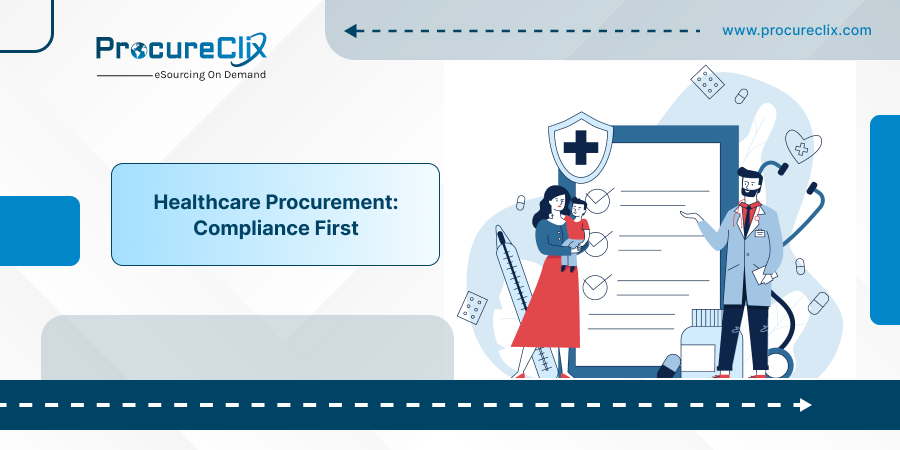
Healthcare procurement needs a framework that supports the intersection of patient safety obligations and regulatory compliance. Generalized procurement workflows start to break down when applied to this tightrope that healthcare procurement teams are forced to navigate.
At the requisition level, the approved vendor list (AVL) can’t be managed downstream, and instead, enforcement must be embedded in the system itself. Procurement teams can’t rely on individual buyers to remember which suppliers are Joint Commission-compliant or which GPO contract tiers apply to a given category.
Another area where generalized healthcare procurement can underperform is contract lifecycle management. It’s common for GPO agreements, DEA-regulated supplier contracts, and service renewal schedules to all operate on distinct timelines with different compliance documentation requirements.
Missing a DEA supplier requalification window or allowing a GPO contract to auto-renew at unfavorable terms creates both a financial and a regulatory issue.
This is where purpose-built contract management infrastructure delivers real value. A centralized contract repository with automated renewal reminders, version control, and a complete audit trail solves these problems and reduces workflow overhead.
Spend visibility across facilities is also a key requirement of healthcare procurement. Multi-facility health systems need to benchmark spend per patient day, identify off-contract purchasing by department, and demonstrate savings attribution to the CFO and supply chain leadership.
Your procurement software needs to integrate with your ERP and BI software to increase visibility and give teams the data they need to make proactive decisions.
ProcureClix’s contract management module is designed around exactly these types of contract lifecycle needs. It tracks expirations across categories, maintains a real-time dashboard of contracted value by department and location, and integrates with popular third-party BI and e-signature tools.
Project-Based Procurement: Real Estate and Construction
In construction, spend is organized around project codes and work breakdown structures (WBS), not cost centers. In that context, standard procurement models built for corporate departments quickly become inadequate.
Another issue is that suppliers are often project-specific, and subcontractors are sourced competitively for a single engagement rather than managed through a standing preferred supplier list.
Finally, procurement cycles are dictated by project timelines, not annual sourcing cycles.
The answer is an RFP/RFQ process for subcontractors and materials sourcing in construction that’s weighted with multi-criteria evaluation, such as bonding capacity, safety record (EMR), schedule compliance history, and geographic coverage, alongside price.
A platform built for general procurement that only supports price-based comparisons simply won’t be effective in this scenario. What construction procurement teams need is a configurable scoring framework that supports weighting qualitative and quantitative criteria, collects structured bid responses, and produces defensible award documentation.
Raw materials price volatility can often add another layer of complexity. Real-time visibility into market pricing at the point of purchase requisition, rather than relying on estimates from project inception, allows project managers to make more accurate cost projections and for sourcing teams to time market entries more strategically.
If you’re in the construction industry, having a procurement solution with the flexibility needed to match your needs is crucial for keeping costs as low as possible while properly vetting suppliers and contractors.
Energy and Utilities: Addressing Risk and Regulatory Complexity
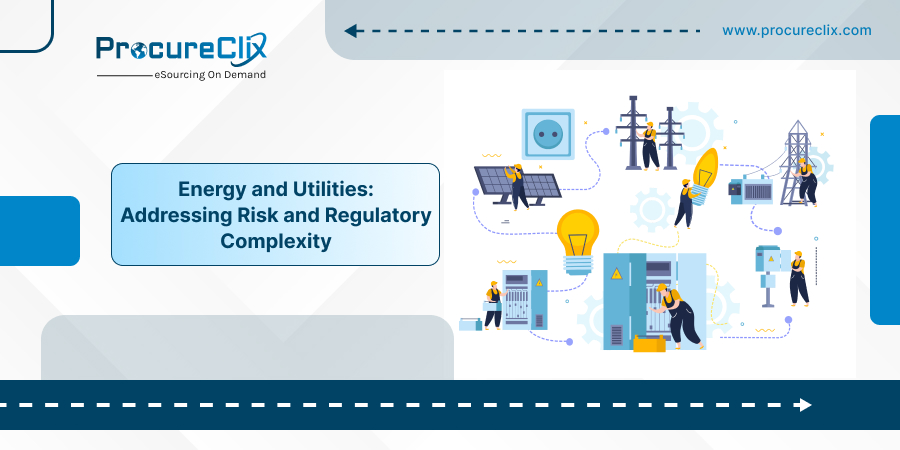
Supplier qualification in the energy industry requires compliance documentation as a prerequisite to bid participation. Using the right tools allows you to embed qualification gates into the RFQ workflow, ensuring that non-compliant suppliers are screened before reaching the evaluation stage.
For competitive energy procurement events, the reverse sealed-bid auction found in solutions such as ProcureClix is a perfect fit. Maintaining bid confidentiality until the designated opening time prevents information asymmetry that can distort competitive dynamics.
With a reverse auction, there’s also a clear audit trail of bid submissions and award decisions that satisfy regulatory documentation requirements.
Biotech and Pharma Procurement
In biotech, research timelines demand rapid procurement of items such as reagents, consumables, and CRO/CMO services. The problem is that GxP compliance requirements impose documentation and audit obligations that drastically slow down generalized procurement workflows.
Solving this requires a platform solution, not more manual overhead.
Supplier qualification for GxP-relevant materials requires a structured documentation chain. For example, Certificate of Analysis (CoA) tracking, vendor qualification questionnaires, and periodic re-qualification against current regulatory standards are all necessary. This documentation must be accessible at audit time, which means it must be systematically captured at the point of procurement, and not left for later retrieval.
For CRO and CMO sourcing, the RFI/RFQ/RFP process often involves complex multi-criteria evaluation. This includes scientific capability, regulatory track record, capacity availability, and cost.
To solve this, the right procurement platform needs structured bid response templates and configurable evaluation scoring that allows sourcing teams to conduct rigorous vendor selection, all while maintaining a documented decision rationale that satisfies both internal governance and potential FDA scrutiny.
Cloud-based procurement platforms like ProcureClix give biotech and pharmaceutical companies these tools in a solution with nearly horizontal scaling, so your procurement is never a bottleneck as your organization grows.
Start With a Customized Demo For Your Industry
With some procurement solutions, being industry-specific just means using templates or labeled dashboards on top of generalized procurement workflows.
True industry alignment happens at the architectural level, and that’s where ProcureClix sets itself apart from other cloud-based procurement solutions.
To learn more about how ProcureClix can drastically improve your unique procurement workflow, contact our experts for a full, customized demo of our software.
With features, flexibility, and integration designed directly into the core of ProcureClix, we can help your organization find efficiencies that generalized tools leave untapped.