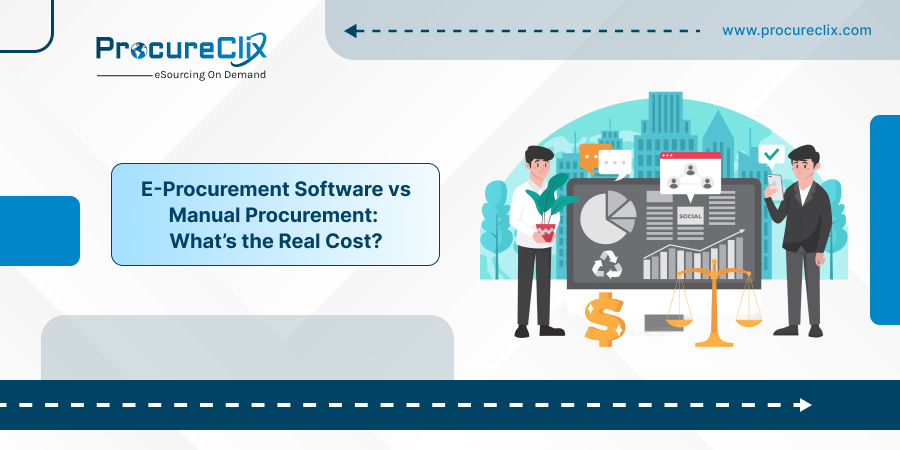
If your organization is weighing the transition away from manual procurement to an e-procurement platform, there are certain costs that not all teams take into consideration.
One common mistake is focusing on the licensing cost of the e-procurement software as the main decision criterion. This makes sense for the initial investment, but it leaves out many costs hidden in manual workflows that aren’t quantified.
To help you make more informed decisions, we’ll explore the true costs of manual procurement and compare those with the costs and potential savings that can come with the right e-procurement platform.
The Hidden Costs Of Manual Procurement
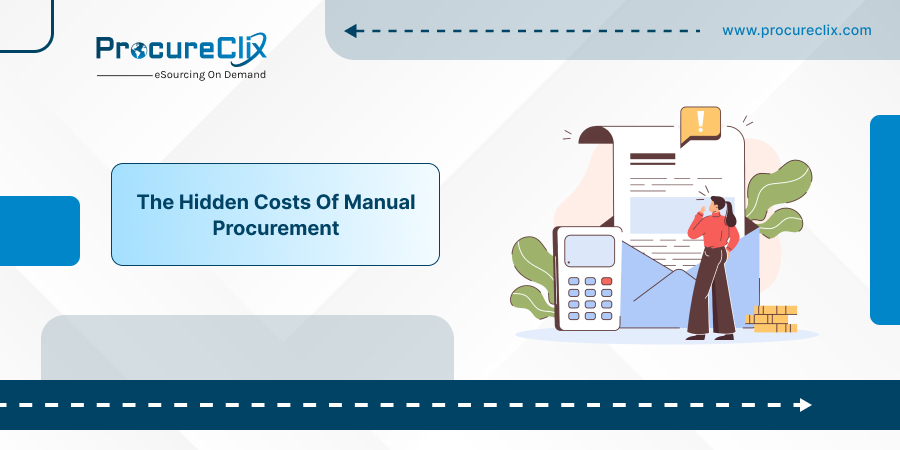
Staying with your current manual procurement may seem like the cheaper option, but that’s because costs are distributed or hidden in other areas. Once you start breaking these down and revealing the numbers, the true cost comes to light.
Labor Hours and Process Overhead
When looking at a typical manual purchase order cycle from requisition to receipt reconciliation, the whole process can take up to 7 hours of total staff time. Part of this is due to the multiple touch points that include email chains, phone follow-ups, manual data entry into ERP systems, and paper-based approval routing.
Depending on your organization’s complexity, this can quickly add up to high costs, with some firms losing $25,000 or more per month due to these hidden processing costs.
Data Entry Errors and Rework
Across any enterprise task, manual data entry can have an error rate of 1-3%. In procurement, these errors manifest as duplicate payments, mismatched invoices, incorrect quantities, and wrong vendor payouts.
But it’s more expensive than just the original error. Each error must also be tracked down and resolved manually, compounding the cost even further as staff needs to reallocate their time.
Maverick Spending and Contract Leakage
With manual processes, maverick spending can become endemic within an organization. Studies across procurement sectors consistently find that up to 10% or more of spend can occur outside of negotiated contracts when manual processes exist.
Contract leakage matters because negotiated rates are meaningless if buyers aren’t routing through them. A company with $10M in annual addressable spend losing 15% to off-contract purchasing is leaving $1.5M on the table every year.
Approval Cycle Times and Cash Flow Impact
Manual approval chains are some of the slowest operations in manual procurement. Approvers are in meetings, documents get buried in inboxes, and escalations require phone calls. All of this can add days to the cycle time, even for mid-level requisitions.
But this cycle time has a downstream cash flow impact. Longer approval cycles delay order placement, which delays delivery, which delays project timelines. In project-driven organizations, procurement delays can trigger contractual penalties far exceeding the cost of any software solution.
Comparing to the Real Cost of E-Procurement Solutions
While manual procurement has plenty of hidden costs, we have to be honest when comparing e-Procurement platforms. E-procurement does have costs, and a full analysis is needed to determine the full cost structure so an accurate assessment can be made.
Total Cost of Ownership (TCO)
You’ll want to consider the total cost of ownership, which can vary depending on the solution you choose. But this will generally include:
Licensing or SaaS subscription fees: These costs will vary depending on the size of your organization. However, this structure also allows you to scale as needed.
Implementation and configuration: Some software platforms have one-time setup fees depending on the complexity of the deployment. Small or mid-level organizations can often avoid these fees when using a cloud-based e-procurement solution.
Integration costs: Connecting to existing ERP, finance, and inventory systems adds complexity and expense. This is why you should investigate the built-in integrations of each e-procurement solution you’re considering. Finding the platform that integrates with your current technology stack can save time and money during the deployment.
Ongoing maintenance costs: For most cloud-based solutions, this isn’t an issue as the software is managed for you. However, for some organizations or on-premises solutions, IT costs have to be considered for the TCO analysis.
Where E-Procurement Delivers Structural Advantages
Beyond the raw cost math, e-procurement changes the cost structure of procurement in ways that compound over time.
Automated Three-Way Matching
Automated PO-to-invoice-to-receipt matching eliminates the manual reconciliation bottleneck found in manual processes. Choosing a platform with this functionality can reduce invoice time from days to just hours.
As an added benefit, this function also drastically cuts the cost per invoice processed.
Supplier and Catalog Management
Having centralized supplier portals and punch-out catalogs enforces purchasing from approved vendors at negotiated rates, structurally eliminating maverick spend. This is a far more reliable spend control mechanism than trying to enforce policy adherence across an entire enterprise.
Audit Trails and Compliance
The right e-procurement platform allows for every transaction, approval, and modification to generate a timestamped, immutable audit record. Manual systems require significant administrative overhead to reconstruct audit trails, which is time-consuming and labor-intensive.
Compliance audits that take weeks manually can be executed in hours with proper e-procurement tooling.
Analytics and Spend Visibility
Manual procurement produces fragmented data. E-procurement platforms consolidate spend data across categories, vendors, departments, and time periods. This enables category managers to identify consolidation opportunities, renegotiate contracts with real usage data, and identify budget overruns in real time rather than at month’s-end.
Evaluating the Costs and Benefits for Your Organization
The cost of manual procurement extends beyond just the financial impact. There’s also an operational capacity cost.
Every hour a procurement analyst spends chasing approvals or correcting data entry errors is an hour not spent on vendor development, category strategy, or risk management.
E-procurement software helps to shift the procurement function into a strategic lever. As administrative overhead decreases, your team can focus on improving supply chains, mitigating risk, and improving supplier relationships.
If you’re considering the move to an e-procurement platform, contact one of our experts at ProcureClix. We can create a customized demo of our software so you can examine the benefits and learn more about how our platform can streamline your processes.